🚨The Real Estate industry is one of the most highly watched by FINTRAC 🚨
With over 2.5M in penalties issued to real estate companies in the last number of years, and the recent enacting of Bill C-12, which promises 40X the current penalty amounts, Real Estate entities need to be more aware than ever of their compliance obligations to avoid scrutiny from regulators and potential monetary impact.
Reporting entities (REs), including Real Estate Brokerages, have an obligation to report transactions to FINTRAC when there are reasonable grounds to suspect a connection to a money laundering, terrorist financing or a sanctions evasion offence.
What we find Real Estate Brokerages struggle with the most is identifying the types of activities or characteristics of a real estate transaction that could lead to Reasonable Ground to Suspect (RGS) a ML/TF offence.
Are you aware of the common red flags in Real Estate deals that could be an indicator of ML/TF or Sanction Evasion?
Our AML experts are back to give you the rundown of the most common Red Flags Suspicious Indicators to watch for when closing a real estate deal.
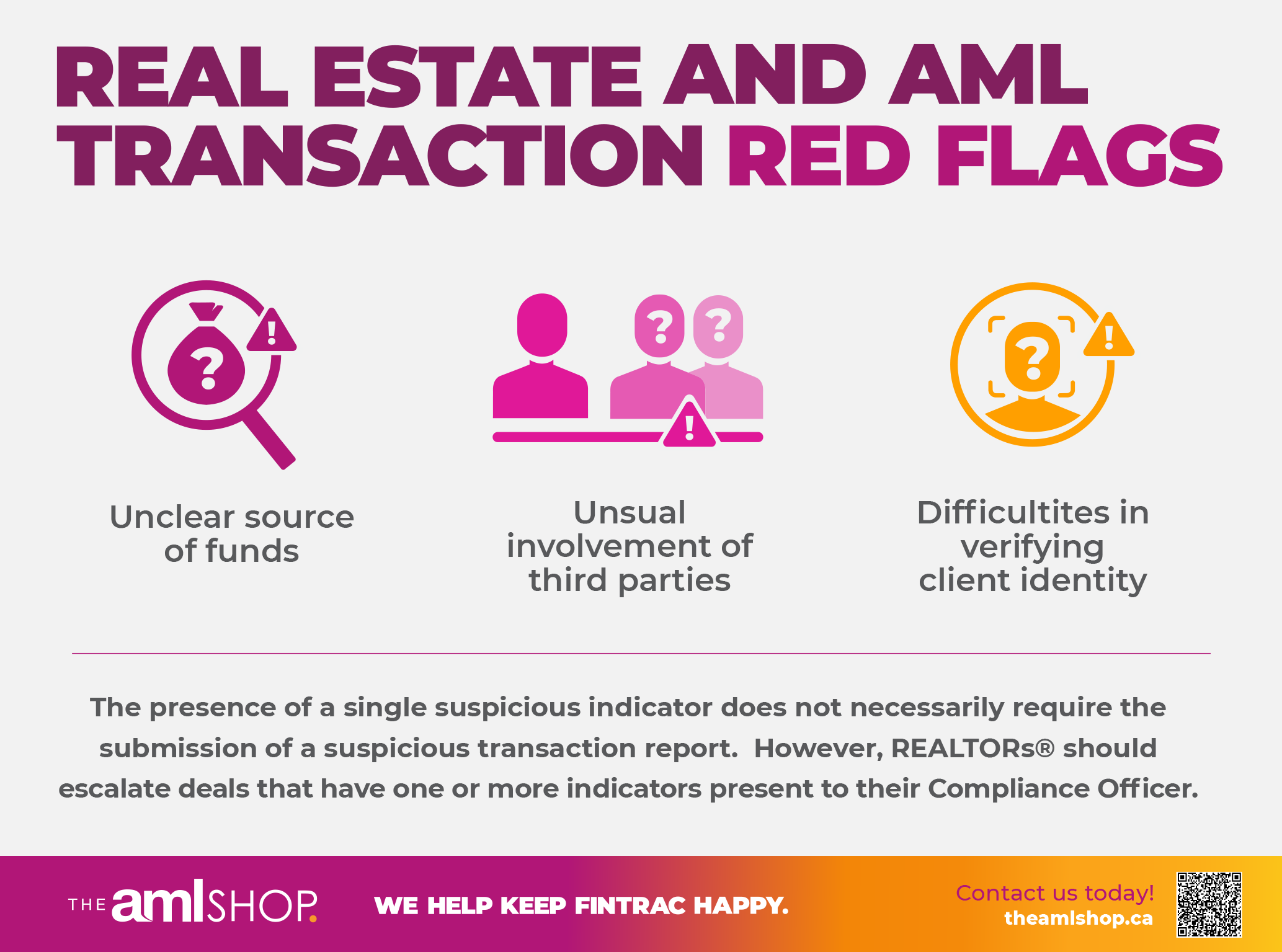
🚩 Red Flag #1: Unclear Source of Funds
Money Laundering schemes often leverage anonymity to avoid detection. When a buyer is entering a real estate transaction, it needs to make “sense” where their funds came from to purchase.
The actual transaction is not always the predicate offence indicating Money Laundering risk.
Often source funds of criminal proceeds are given to a buyer to funnel into a real estate purchase to “clean the funds”.
But, it’s important to remember two things:
1) the person might just be using criminally derived funds to buy the house to enjoy the house for the purpose of its enjoyment, not necessarily as a series of transactions to clean money;
2) the person buying the house may not be the one who committed the crime that generated the proceeds in the first place.
For example, be aware of:
The Straw Buyer Arrangement
This scenario is where a buyer purchases a property on paper, but there is a side arrangement with the true beneficial owner of the property, who is ultimately funding the purchase.
How to spot a Straw Buyer Arrangement
A good indicator that a purchaser is not the true beneficiary of the real estate deal is if the buyer is purchasing a property that is beyond their apparent financial capacity. For example, a homemaker, a student or an unemployed person have non-income generating occupations - their financial standing on paper should match their employment status.
When a purchase of real property does not make sense within the context of a client’s occupation or nature of business, Realtors must take measures to understand the source of funding that will be used to purchase the property.
🚩Red Flag #2: Unusual Involvement of third parties
The involvement of third-parties within a real estate transaction can be a suspicious indicator, depending on the relationship between the parties involved. If a client shows up with a party who seems to be directing the deal, and the relationship is not discernible, this should be reported to the compliance officer at your brokerage.
A parent or relative is usually not a red flag - but if it’s a business associate, a lawyer or an unknown party - those alarm bells should be ringing!
🚩Red Flag #3 Difficulties in verifying client IDENTITY
Evasive behaviour during the identity verification process is a MASSIVE red flag.
Identify Verification is one of the most important tools realtors have in determining if a real estate transaction is suspicious or not, as criminals usually don’t want you to know who they are. Why would they? They much prefer anonymity to ensure their crimes are executed seamlessly.
What to look for 👀
A client that is reluctant to participate in Identity Verification processes or a client that provides contradictory information during the ID verification process - this may indicate something is unusual or suspicious about the transaction.
Inconsistencies in identity verification documents - for example, if dates of birth do not match on the clients drivers license and passport, this inconsistency could indicate a reasonable ground to suspect a ML/TF offense. Mortgage and Title Fraud is a high-risk threat to the Canadian Financial system and often fraudulent activities can be spotted in the real estate transaction itself - mismatched IDs is a common indicator that there could be potential mortgage (or title) fraud involving identity theft.
✅ Expert insight - the presence of a single suspicious indicator does not necessarily require the submission of a suspicion transaction report. However, if there are several indicators present, this should trigger a Realtor to escalate the deal to their Compliance Officer.
🔦 Conclusion - Stay aware and remain vigilant
Your first step in remaining compliant is understanding characteristics of a real estate transaction that could potentially indicate suspicious activity.
By ensuring your compliance program is effective and you are upholding your obligations, you can help maintain the integrity of the Canadian financial system AND avoid FINTRAC enforcement actions.
Remember - context is key. Not every red flag means an STR is required. But, if you are seeing several anomalies within the same transaction or for the same client, you need to carefully review the transaction or file with the consideration of client risk and other relevant context, to assess if a suspicious reporting threshold has been met.
At The AML Shop, we have worked with volumes of Real Estate Brokerages and Developers to help them stay compliant. We would love to support your team with:
🔶 AML Compliance Program Advisory
🔶 Policies and Procedures
🔶 Compliance Effectiveness Reviews
🔶 AML Training for your staff
🔶 And more!
Contact us today to get started contactus@theamlshop.ca
We Help Keep FINTRAC Happy 🏡